Excitement for the grandchildren on the day of a visit to Marwell Zoo. Parents primed, grandparents had the tickets but it was raining stair rods. So we went to the Pub for lunch. As the bill was paid, the air cleared and the sun came out.
Many people have mixed feelings about zoos and I am one of them. There is nothing to beat the thrill of seeing a wild animal in its natural surroundings even if it is only a glimpse.

Seeing animals
Some animals you do not wish to meet in the wild. Like the two boys who came face-to-face with a lion.
“We’re finished.” Said one. “We can’t run faster than a lion.”
“I don’t have to.” Said the other. “I only have to run faster than you.”

The grand children were well versed in the animals, their habitats, environmental and conservation issues. My grand-daughter introduced me to the Fossa (Cryptoprocta ferox) from Madagascar. It has a snout and coat like a dog but moves like a cat. It is a member of the Mongoose family (Herpestidiae).
Before the zoo
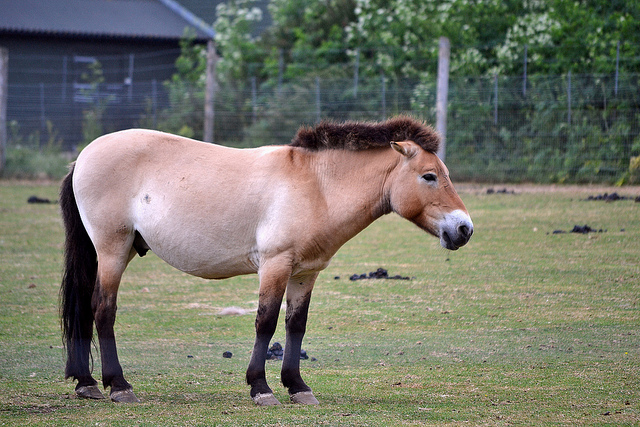
Before Marwell was a zoo I visited John Knowles, the owner. He already had a good collection of animals including a leopard. Most dramatic was a herd of Przewalski’s Horse (Equus ferus przewalskii). These have been re-introduced into Mongolia where they had become extinct. Ninety were re-introduced and now there are 233.
Przewalski’s is closely related to the domestic horse but has a stiff mane. They are very shy. When I saw them the herd of about 20 gathered together and faced us. Then they suddenly galloped towards us and stopped 20 metres away, kicking up a cloud of dust. It was an intimidating performance.
John Knowles played a major role in conserving the Przewalski’s horse and also the Roan Antelope.
Children’s favourites
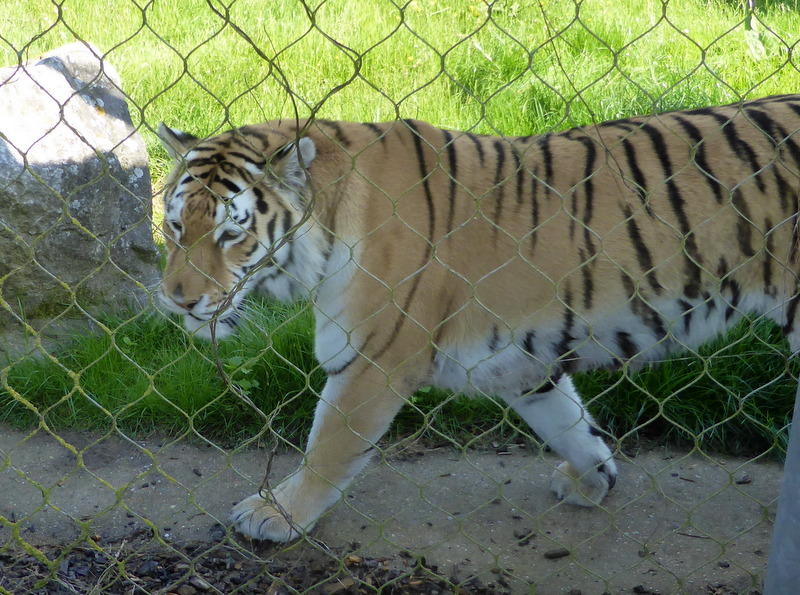
Favourites with the children were: Penguins, because it was feeding time, Giraffes, because they are so tall and the reptiles. The tiger was dramatic but not very friendly.

At the end of the day the children bought cuddly penguins and a tiger.
About John Knowles
John Knowles once met a Sri Lankan man who had shot an elephant, leaving a baby orphan. He disapproved but the man insisted he see the sugar crop which had been destroyed. It would have kept the Sri Lankan family for a year.
“You can afford to care about the elephant, I can’t.” The man told him.
Richard Leakey
Another notable conservationist is Richard Leakey. He was a Kenyan politician, his father, Louis, discovered many important fossils of early man. Richard set up a very successful elephant anti-poaching force. It was so successful that he made enemies, many of them politicians who had interests in the ivory trade; it is said his plane was sabotaged. He lost both legs in the crash.
When I saw him he stood for 2 hours on his artificial legs and spoke about conservation. He said the problem was with boundaries. The elephants did not respect the boundaries of the National Game Parks because they followed their traditional migration routes through farmland. The boundaries do not keep the humans out as the growing population puts pressure and land for farming leaving less and less room for elephant, lion and leopard.
And man shall inherit the earth. But will he like it when there are no large animals left?



I must admit I haven’t been to Marwell for a long time but if we have to have zoos, it should be along those lines. I’ve always liked the conserve and return to their natural environment when possible policies.
Half the battle is convincing people that conserving wildlife is in their interests too, I think.