Image Credit: Images created in Book Brush using Pixabay photos.
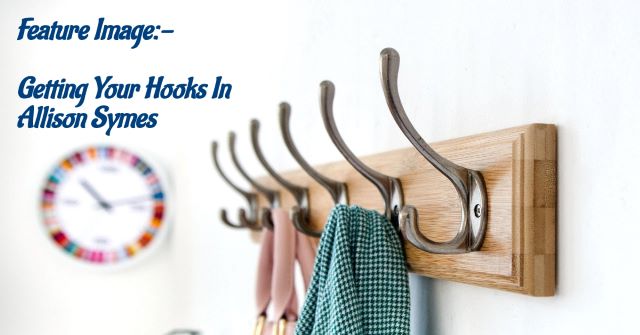
Hooks are crucial for holding a reader’s interest, regardless of whether you’re writing fiction or non-fiction.
They can also be placed in varying places within a piece to give maximum effect. The idea here is an opening hook draws readers in, one somewhere in the middle will keep their interest going, and then another one at the end brings in a satisfying conclusion to the piece.
This mirrors the Three Act structure though the hook in itself isn’t enough to keep things going. The golden rule, if there could be said to be one, is there should be no boring bits, nothing readers might be tempted to skip.
Delivering on the Hook’s Promise
Hooks are often the means to achieve that but the challenge for the writer is to then deliver on the promise of those hooks. So if it looks like there is going to be a twist in the tale, because the opening hook implies that, then there should be one.
As I mentioned in my interview with Wendy H Jones last week, I do think of the Raymond Chandler quote about bringing a gun into the story and expecting the character to then use it. Hooks do this for me. Why put one in at all if you’re not going to use it properly (or at all)?
I love opening line writing exercises. I always see these as hooks. If the opening line doesn’t grip me, why should I or anyone else keep on reading?
I like an opening line to show me something of the situation and character and both of these to tempt me enough to read further.
George Orwell’s classic opening line to 1984 – It was a bright cold day in April and the clocks were striking thirteen – is a good example of a hook in action. The hook comes right at the end of the line for me in the one word thirteen. Immediately, I know this story cannot be set in the world as we know it now and I also want to find out who it is who has noted it was a bright cold day. I read on. Job done.
Non-Fiction and Writing Exercises
For non-fiction, the hook has to give the promise the following article or book will be worth reading. It has to set the promise of what is to come. If it is on a subject you’re already interested in (as I am with the recent discoveries surrounding Richard III), then that opening hook will confirm you are going to find out more and again job done, off I go and I read.
The challenge here is to lure in those who are interested in the subject to want to find out more but are not, at this stage at least, passionate about it. They are the ones a good non-fiction writer will want to become passionate about the subject and their work is the way to that. But you have to get them reading that work in the first place and hooks are a useful tool here.
Usefulness of Opening Line Hooks
I often set writing exercises as part of the flash fiction workshops I run for the Association of Christian Writers.
I often use opening lines because I know I can plant a hook which will encourage my fellow writers to give these things a go. They’ve come up with some wonderful stories as a result too precisely because they did deliver on the promise of the hook. But there has to be something worthwhile to tempt them into drafting something!
Kinds of Hooks
Hooks can be an interesting character type, dialogue, location, almost anything but the common element is the hook must provoke curiosity in the reader (or the writer responding to a prompt). From a writer’s viewpoint, a useful starting point is working out what would intrigue you enough to want to respond to the hook in the prompt. From the reader’s viewpoint, a good hook will trigger curiosity to want to find out more immediately.
I often use dialogue as my hooks because I know when reading other authors’ stories conversation between characters immediately draws me. There is an immediacy to dialogue which for me will always act as a hook. So it is no real surprise then I often use a line of dialogue when I set an opening line writing exercise.
I always do love to “hit the ground running” with my stories. The discipline of flash fiction with its tight word count encourages this. A hook also helps you to make the most of that word count because it does a lot of heavy lifting. It will lead into further developments in the story and there is only one way the reader can find out what these are – they must read on.
Placing Your Hooks
Also by working out where in your story to place hooks, especially if you have more than one, you are giving yourself a rudimentary structure to your tale and I think that gives it more chance of being a successful one.
I’ve written hundreds of flash fiction and short stories. I’ve only ever abandoned two stories in my time. Why? I hadn’t thought them through enough. There was no hook to keep me wanting to write these two tales up (and absolutely no incentive for a reader to look at them). I basically boxed myself in.
I haven’t made that mistake since. I start by knowing who my character is going to be and what their main attributes are. There will be something in that which will hook me in to want to write about them.
For example, if I have a character who is known for being too honest and they’re in a situation where they need to be tactful, there’s the hook right there. I’ve got to find out what happens here. That’s what any kind of hook should do for your story. Make a reader want to find out more.
Hooks can also be used to pile the pressure on your characters too. If with my honest character needing to be tactful, I write in another character who will reward them with money or what have you if they can do what seems to be impossible here, it gives my character even more reason to try to be successful here. Again I’ve got to read on to find out if they do get their reward or not.
I often end my flash pieces with a twist in the tale ending or a humorous punchline. I see these as closing hooks and ensure they are a good reward for readers. These final hooks deliver on the promise of the story and end it powerfully, leaving my reader hopefully feeling they’ve had a satisfactory read.
I always ask myself here would this hook work for me if this story had been written by someone else. It’s a good ploy and makes me evaluate my hooks to see if they really are strong enough.
Hooks are huge fun to write too.
Conclusion
It’s almost certain in the stories you love the most it will be the characters and the hooks which draw you in to keep reading. I know that’s true for me.
Giving careful thought to your hooks and where to put them in your tales will lead to crafted writing and a more powerful story precisely because that thought has gone into it. Prep work for stories is never wasted, I find, and can save you time later. I know this kind of thinking through helps me avoid messy middles.

So think about the hooks you’ve enjoyed discovering in your own reading. What is it about them which draws you in? Then emulate that for your own stories.
Good luck and happy writing!
Related Posts:-
Read interviews with Chandler’s Ford writer Allison Symes: Part 1 and Part 2.
Read blog posts by Allison Symes published on Chandler’s Ford Today.
Never miss out on another blog post. Subscribe here:




Leave a Reply