Image Credit: Images created in Book Brush using Pixabay photos.
Other than the word “marketing”, the word “pitching” can be enough to make a writer’s blood run cold. Why? In both cases, it is because we all know it has to be done. We also all know we would far rather be writing.
We also know with pitches we do open ourselves up to rejections. Indeed, it is common to have far more rejections than acceptances for any kind of pitch.

But unless you do pitch your story (for a competition, say) or an article (for any kind of magazine), you can’t receive acceptances. So it is a case of accepting the need to pitch and working out the best way(s) to go about this.
I pitch regularly. Every time I enter a story competition, I am pitching my work to the competition organiser and judge. I pitch my articles to Writers’ Narrative. I pitch articles I send elsewhere.
So I thought for this post I’d share some tips on what I’ve found useful though I will add I continue to expect rejections along the way. The one comfort here is they do happen to everyone, as you find out within five minutes of talking to most writers. It isn’t just you. It isn’t a judgment. There are reasons perfectly good work is turned down and I’ll have a look at some of these reasons too here.
Tips for Pitching
Research your market thoroughly. Do you know who you are aiming your pitch at and why it should go to them, rather than someone else?
Have you followed the market’s guidelines for submitting pitches to the letter?
Have you read the market/publication regularly enough so you already know what their house style is and the kind of material they are after? I know it sounds obvious but stories and pitches can and have been sent in to totally the wrong places for them. It is why when you read details of competitions, the organisers will often give ideas of what they don’t want. (You can bet from that they have received these things in the past given they’ve felt the necessity to say no more, basically!).
Prepare your pitch in good time and, as with any story or article, “rest” it for a while before you come back to it and reassess it. You pitch once. You want to get your pitch as near perfect as possible.
As with fiction writing, the break away from work will help you spot errors more easily. You are more likely to re-read your piece as the recipient would because it will seem fresh to you and this is incredibly useful. You need to read the pitch as if someone else had written it and then you can ask yourself does this pitch appeal to you if you were on the receiving end of it?
Be honest with yourself here. It may well be the pitch is fine but you’ve spotted a weakness in part of it – well, that’s fine. It gives you the chance to correct that before sending it out.
Pitches are usually kept fairly short. Again follow market guidelines to the letter here. I can’t stress enough how important this is. Editors etc love people who follow the rules!
Record Keeping
It is a good idea to keep some sort of record as to what you have pitched where, especially if you plan to pitch regularly to specific markets. You don’t want to pitch the same thing twice.
Also, you need to keep records for when you do receive acceptances. Why? Well, when the fees do come in, you should keep a record of payments for potential tax liability.
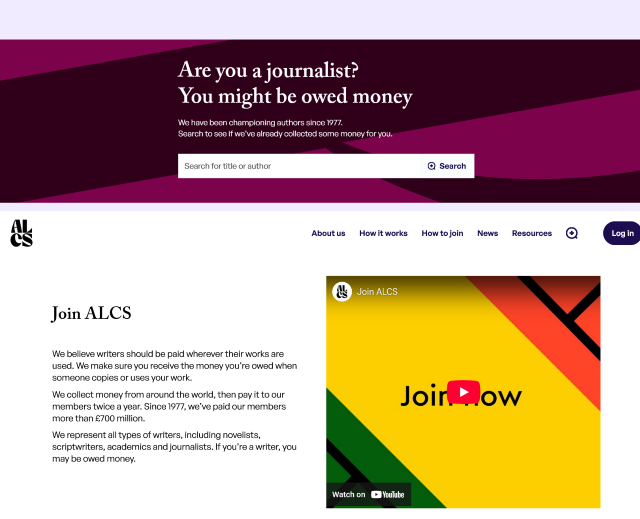
For any work, where you are submitting to a market with an ISSN number (International Standard Serial Number) for articles or an ISBN (International Standard Book Number – re stories – especially for anthologies), you can add these to your listing on the Authors’ Licensing and Collecting Society (ALCS). You can earn money from this. I do.
To find out more about ALCS, do check out the link.
If you’re a member of the Society of Authors (SoA), you also receive ALCS membership for free as part of the perks of membership with the SoA.
It would also pay to keep your records so you can look through every so often and see where the acceptances happen. As well as being a positive thing to do, you can see where your pitches are being the most successful. You can look into what you’re getting right with these pitches and use what you find out to help you improve your pitches elsewhere.
Naturally, if you are approaching agents and/or publishers, having a list of relevant successful articles/stories being accepted will look great in your query letter/writing CV. You do have to remember what you had where though! Especially when you’ve been writing for some time, a written record is crucial.
When Pitches are Turned Down
It will be a question of when, rather than if. I’m not convinced any writer ever has a 100% hit rate here.
Do remember even if you do “everything right”, there is no guarantee of acceptance. The good news here is if a pitch does get turned down, writing it and following the guidelines of the market concerned is still invaluable experience. If you’re writing, say, a general article, there may be other markets so you may get the chance to polish up your pitch further and submit it somewhere else.
Also bear in mind even if Market A doesn’t take your pitch, you can still submit other pitches to them, as long as they’re suitable for Market A (which is where your having carried out your research into the market pays off, naturally).
Sometimes a pitch is turned down because the market has already accepted something similar. It happens. As does the fact they’ve published something on your topic in fairly recent times so don’t want the same topic again at this moment in time. Sometimes timing can be a factor here in whether a pitch is accepted or not.
Conclusion
Pitches are hard work. With fiction, most submissions now are done electronically and via a form such as Submittable or Duotrope. Many of these will give you a box where you can give a brief bio of you and your work. Often this will be at about the 50 words mark so it is worth honing your bio down to various lengths (including 75 and 100 words). It takes time to get these right but it is all part of your overall pitch (and can usefully be added to the About You part of your website/social media platforms).
Good luck and happy pitching!

Related Posts:-
Read interviews with Chandler’s Ford writer Allison Symes: Part 1 and Part 2.
Read blog posts by Allison Symes published on Chandler’s Ford Today.
Never miss out on another blog post. Subscribe here:


Leave a Reply