Image Credit: Images created in Book Brush using Pixabay photos. Some images directly from Pixabay.
Author interviews are a joy to conduct and to take part in on the other side of the questioning too. They take many forms, of course, but all can help the writer with their marketing. It pays any writer to be prepared for interviews, even if you’re not yet published.
You can study interviews already out there, including the ones I share here on Chandler’s Ford Today and figure out how you would answer the questions if they were put to you. This is invaluable practice for working out how to talk about the writing you do.
And you will need to talk about it at some point, else how will anyone know about it?

Preparation is Key and Nothing Is Wasted
Good preparation is essential. Doing so will make you feel better. Doing so is a sign of professionalism. Off the cuff remarks have an unfortunate tendency to backfire. Preparation also means you include everything relevant to the interview. It is easy to forget something which is obvious to you but which your interviewer will not know.
Early on, long before I was published, I read every author interview I could and worked out answers to questions based on what I had written at that point. (I still do research author interviews including ones I conducted years ago because I love them and they remind me of questions I’ve put to people in the past which might be useful to put to people I’m interviewing now).
Just the act of writing this down showed me where I needed to be clearer in what my story was about. It is a good idea to have a one liner showing this, regardless of whether you’re a short story, flash fiction, or novella/novel writer. Someone does always ask you to explain about your book etc. Be ready!
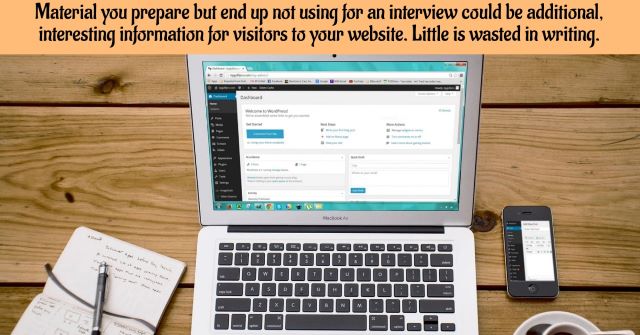
Some of the material you prepare for interviews you may not end up using in the interview itself. It’s not wasted material though as you can craft a post for your website based on what material you didn’t use. Keeping your website updated with fresh material is useful for bringing visitors to your website at all and encouraging them to keep coming back to it. Plus you can always share news of your interview on the website itself.
Text Interviews
When it’s a text interview (as I do here), give yourself plenty of time to think about the questions before sending them back. Inevitably, you will need to include an author bio, a book blurb and images to include your author shot, book covers etc. Also don’t forget your social media links. I find it pays to make sure mine are working as they should before I send anything in to anyone interviewing me. It helps your interviewer no end if you can send that along in good time and in one handy email with attachments.
I always ask the authors I interview here to send material back a week before the post is due to go live because it gives me time to get back to them if there are any last minute queries. It doesn’t happen often but it does occur so I like to be ready for it.
If you have pictures related to your book (ones you’ve taken or which are free to use, see Pixabay, Pexels, etc for this), do send them in too. I use pictures on my posts to break up the posts (makes it easier to read on screen) and images can show so much in addition to what you’re saying in the text.
Recorded Interviews
When you’re being recorded (for podcasts), it would pay you to draft some questions and answers and record yourself on Zoom. You can play back the file to hear how you sound. It was how I found out I have a tendency to speak too fast. So I’ve learned to slow it down!
Also you can get a sense of what kinds of questions your podcast host is likely to ask you. Again you can prepare answers. Don’t see this as cheating. It isn’t. What it is, in fact, is you doing your homework. I’ve found that has helped calm my nerves ahead of going on podcasts because I know I’ve done the “spade work” and prepared as much as I can.
Sharing Your Story
It pays to have interesting stories to share with your interviewer. As well as mentioning your new book, share something of how you came to write it, the struggles you had writing it (there are always some!), and how you feel now the book is “out there”. All of that makes for a good, fully rounded interview. It will make you more relatable to those who read or listen to your interview, especially fellow writers.
Also give some thought as to what brought you into the writing world at all. What made you decide to “go for it” and write? Again that makes an interesting background story to the overall news of your book coming out. It is so useful too if you can share tips and advice on writing you have found useful (and still do). No one writer can know everything here so I take the view the more interviews I read or listen to, the more I will learn. It’s why I nearly always ask those I interview here for their three most useful writing and/or marketing tips. These are unlikely to date too.
A good interviewer will always try to ask questions which encourage the interviewee to “open up” and share more about their writing life. What is to be avoided are questions where the answer can only be yes or no. An interview needs to engage the people listening to/reading it and short, sharp answers like that are not the way to do this.
As with social media where the idea is it is meant to be social, you don’t want “buy my book” to be the only message coming out from your interview. Naturally that message will be in there (and hopefully people will take the hint!), but you also want to come across as a friendly, down to earth author, who works hard at their craft, recognises the need to keep learning, and is thrilled to bits their book is out there. Now re-read that line. Isn’t that much more interesting than just “buy my book”, which can come across as the writer being a bit desperate, a scenario to be avoided at all costs?
You also want to be the kind of interviewee whom your host will be keen to interview again at some point.
Conclusion
I continue to learn a great deal from author interviews, both in terms of information shared, and in how the author comes across. This is great because it can help me to “up my game” when I am on the receiving end, which is no bad thing.
Interviews also are fabulous things to share as part of your marketing via your own social media channels. They show you are an active writer, your work is out there, and of course they help you get your name out there. It is said people need to see things (including author names) seven times before they even think about buying anything (including your books) so if you do get the chance to be interviewed, go for it, but prepare first and good luck.

Related Posts:-
Read interviews with Chandler’s Ford writer Allison Symes: Part 1 and Part 2.
Read blog posts by Allison Symes published on Chandler’s Ford Today.
Never miss out on another blog post. Subscribe here:


Leave a Reply