Image Credit: Images created in Book Brush using Pixabay images. AI shots avoided.
I can guess what you’re thinking here. Something along the lines of Allison, you’re a month early with this at least, aren’t you?
Fair point but I’d say no. Why?
I’m not a huge fan of Halloween, much preferring to commemorate All Saints Day on 1st November, but I did think the thought of Trick or Treat could inspire some story ideas. Naturally there could be some non-fiction articles to write up about the origins of Trick or Treat as well but, for this post I’ve got my fiction hat on. The two items here can be treated separately or together so let’s explore what could be done here.
I’ve loved fairytales for more years than I care to remember. My sister and I were blessed with a mother who loved books and we were read to regularly as children. It is one of the best things anyone can do to encourage a child’s imagination and develop their vocabulary. Not that my sister and I were aware of this, of course. We just loved the entertaining stories and relished the “baddies” getting their comeuppance.
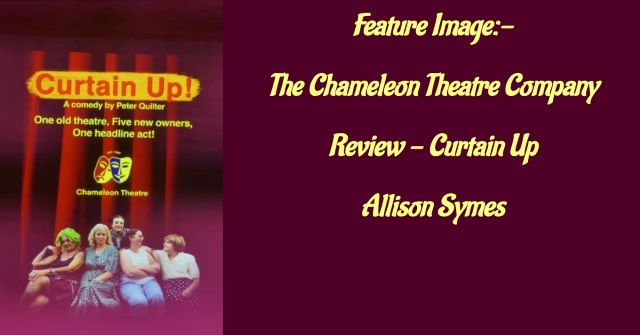
As ever, it was a joy to go back to Ritchie Hall to see The Chameleon Theatre Company stage their latest production, Curtain Up by Peter Quilter. Janet and I went on the opening night, Thursday 24th September 2026. A brief outline of the plot follows.
What I will say is if I had the chance to see this show again, I would have gone again. It’s a good story. It isn’t a laugh out loud play, to my mind, but is touching at times, amusing and you can relate to the characters. You so want things to somehow work out for them.
[Read more…] about The Chameleon Theatre Company – Review – Curtain Up
I’m never sorry to welcome September back. It’s a lovely month and I’ve always loved the changing colours of the leaves. Okay the darker evenings are a downside but then again does that give more time for reading and/or writing? I would hope so. Of course, following the heatwave this year, the cooler autumn temperatures are also welcome.
But I thought I’d look at using autumn in our writing for this post and hope you find it useful. It’s always a delight, incidentally, to create pictures via Book Brush for my Chandler’s Ford Today posts but I had a wealth of wonderful images to choose from for this so hope you enjoy these too.

I’ve just returned from a wonderful break in the north-east of Scotland. The scenery there is amazing. Naturally, the change of scene has been rejuvenating (as were the winds!). One highlight here was as we drove through the Cairngorms National Park to get to where we were staying, we saw plenty of snow still on the mountains. In the valleys below them were fields of oilseed rape in full bloom. Quite a contrast!

Now fiction reflects life. So if we need our metaphorical batteries recharging, it is likely our characters will need something similar themselves. Even superheroes have weaknesses (Kryptonite, anyone?) and/or need time to recharge before getting on with their acts of derring do.
The essentials for any story are to have a proper beginning, middle and end. This conveniently helps with this post as it automatically gives me three sections to write about. But the following thoughts will apply to any fiction, regardless of length, and, as writers, we will always be looking to improve our skills. For a story to grip a reader, there has to be something for the reader to be gripped by!
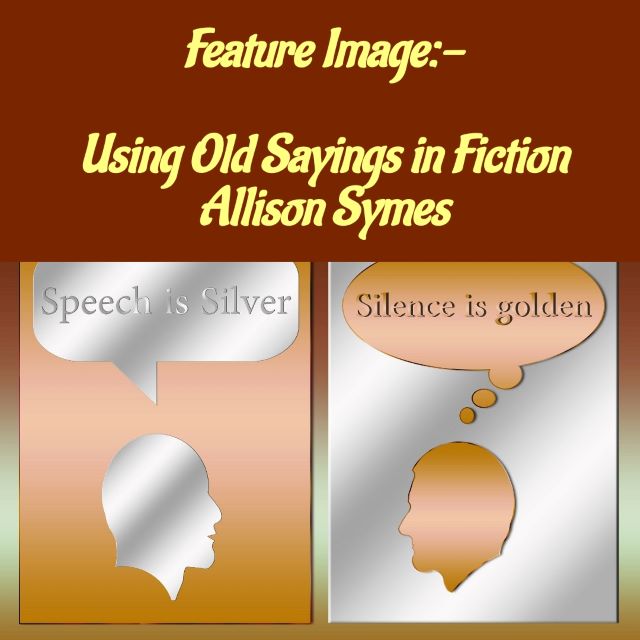
There is a lot of truth in the old sayings. One which immediately springs to mind for this month is Ne’er cast a clout before May is out. It is always a good idea to have a coat to hand until we get into June at least! But can we use these old sayings for stories or as themes for stories? Definitely. Because these things are timeless, that will help give your stories longevity too.
This post then will explore a few sayings and suggest some thoughts on what could be done to use them for creating stories. Bear in mind too, these sayings are often open to interpretation. Also, even where they’re not, you can use them time and again for different characters and situations.
Is there anyone who can’t name a list of things they wished they’d known earlier? No matter who you are, there is bound to be something here. I thought I would look at this question from a writer’s viewpoint (otherwise this post will be far too long!). Were there things about the writing life I wish I’d known earlier? Oh yes.
It is ironic that, regardless of whether you create honest or dishonest characters or both, you do have to be honest about how you create them. What do I mean by that?
I mean you create a character who is fully rounded, where readers can see why they are the way they are, even if they disagree with them, and your characters are not set up as cardboard cutouts. They have to seem real and believable, an honest creation if you like.
But you can have fun with honest and dishonest characters and naturally literature abounds with both kinds.

As you know, one of my highlights of my writing year is to go to The Writers’ Summer School, Swanwick held at The Hayes in Derbyshire in August. As well as enjoying the fabulous workshops and courses (and having had the privilege of leading some there too), the other biggest joy is in getting to meet other authors.
Why? Because it is so liberating to share the joy of creative writing with others who “get it”. There is no need to explain why you write here. We just do and we share many tips and tales of our writing lives with each other during this event.
In 2024, Gemma Owen-Kendall got to launch her debut novel, Red Daisy, published by SpellBound Books, at The Writers’ Summer School in their wonderful Book Room.
Many congratulations, Gemma, on this and welcome to Chandler’s Ford Today. It is always a joy and privilege to discuss writing journeys with other authors here but before I put some questions to Gemma, please find below her author bio and a blurb for Red Daisy. This interview is part of a book blog tour organised by Lynsey Adams of Reading Between the Lines Book Vlog.

[Read more…] about Author Interview: Introducing Gemma Owen-Kendall
I catch up with a lot of stories during the Advent and Christmas periods but not always via books (of any format).

Everyone has their own tastes in books and stories, of course. The publishing and literary world would not be so interesting and extensive if we all read the same thing. Genres would disappear and creative imagination would be limited to whatever it was we all read. But there are elements in books and stories which cross all genres. These are the things I look out for whenever I read any kind of story, regardless of its word count.

As some of you will know, I discovered flash fiction by accident. It is easily the happiest writing accident I have ever had/am likely to have and I’m grateful for it. Two published books later with a third accepted – well, it’s the kind of accident any writer would welcome.
CafeLit, with whom I’d been published for a while, issued a 100 word challenge and I gave it a go, discovered the form is addictive and I’ve not looked back.

[Read more…] about Top Flash Fiction Writing Tips and the Benefits
It is a joy to welcome Debz Hobbs-Wyatt to Chandler’s Ford Today. I’ve known Debz for some time thanks to our mutual connections with Bridge House Publishing.
I’ve been on one side of the fence here, having had several stories in various BHP anthologies over the years. Debz has been on the other side of the fence with BHP founder, Gill James, and the two continue to work closely together. Indeed, I’m looking forward to meeting up again with Debz and Gill at the Bridge House Publishing Celebration Event in December.

[Read more…] about Author Interview: Debz Hobbs-Wyatt – If Crows Could Talk – Part 1
What would you define as a classic story? Do you define it by age or by how often it can stand being re-read? Or do you define it by its word count where you have a story where you can’t imagine another word being added and/or words being taken out of it?).
Of course, your answer can be any of the above, maybe all of them! For me, though, the age of a story is irrelevant. If it is classic, it is because it is a fabulous tale, not because of its antiquity (or lack of same).

It is a joy to welcome Ruth Leigh back to Chandler’s Ford Today. Last week we discussed her forthcoming launch for The Continued Times of Isabella M Smugge, the latest in her series involving her wonderfully funny and moving creation. This week, we look at the issues of marketing and how well Ruth needed to know Isabella before writing her stories up.
And now back to Ruth. Welcome back, Ruth.

[Read more…] about PART 2 – Ruth Leigh and The Continued Times of Isabella M Smugge
Setting often act like characters. Many stories wouldn’t work without their settings. It is as true for The Lord of the Rings and the Discworld series, as it is for Wuthering Heights and A Christmas Carol. Can you imagine the latter happening outside of London, for example? Writers can exploit settings to get more from their tales/characters.

It is the irony of all fiction writing that, while everyone knows the stories are made up, people want characters they can believe.
These characters must be true to life so a story writer’s job is to make their characters seem real enough that, if the situation could happen in reality, these would be the characters who would also exist in reality.

One aspect of fiction, whatever its genre or length, is it does reflect on our behaviour. It isn’t flattering either, most of the time. The classic fairytales, for example, call evil out for what it is and the kind of evil shown in them (such as cruelty to step children) is something we see only far too often for real.

Stories tell us what we know. Even in the most fantastical of settings, there will be something we can identify with (otherwise, why would we read such things?).

And human behaviour is the direct reason for any story. We use stories to try to make sense of the world we know (and perhaps more than ever in crisis times such as the one we’re going through now with the situation in Ukraine).