Image Credits:-
Images created in Book Brush using Pixabay photos. Screenshots were taken by me, Allison Symes. AI images avoided.
I thought I’d write about this given I’ve just seen Curtain Up performed by The Chameleon Theatre Company. I hope to write a review of that for Chandler’s Ford Today next week. But it did remind me comedy in writing comes in various forms, including radio, stage and screen, as well as via our beloved books.
I also believe, aside from poetry, comedy is the hardest thing to “get right” in writing. People’s tastes in comedy are subjective. Those tastes can change over time too. The jokes Edwardians would have laughed at would probably not strike us as funny now (and even going back just thirty, forty years, there were jokes around then which, understandably, would not be told now).
So a writer then, I think, has to accept if they are going to write any kind of funny material, not everyone is going to like it. Even those who do may not “get it”.
All the writer can do is have the comedy arise naturally from the characters and situations (some of which may be crises) and hope most would find those funny because the readers have followed the action to a certain point, have got to know the characters and so are more likely to smile at the humorous situations the writer has placed their characters in.
It is a gamble but then you could argue all writing is a gamble given you can’t know how it will go down.
What do I like to see in comedy writing then?
Comedy Moments
I love comedy moments within a book which is not strictly speaking a funny one. These moments can make the character seem more human and relatable. It also makes sense to me because humour crops up in life where we’re often not looking for it so why shouldn’t that happen in stories as well?
Sometimes comedy moments add so much poignancy to a story. The classic example of that is from Goodbyeee… the last episode in Blackadder Goes Forth. That moment just before the men go over the top, Baldrick thinks he might have a plan, and Blackadder asks was it “as cunning as a fox who’s just been appointed Professor of Cunning at Oxford University?”. And then there’s Captain Darling’s revelation to Blackadder he was not at all happy at suddenly finding himself at the front and from being an unlikeable character, we get to see the human side of Darling and pity the poor Doris he will never get to marry.
Humour, handled well, can sharpen human insight and create a good deal of empathy. We get humour.
Humour as a Natural Development
I like to see humour in stories either as (a) it is clear from the outset the book is a funny one so the laughs don’t feel forced or (b) the humour develops naturally from the characters interacting with each other, regardless of whether the book is meant to be funny or not. Ideally (b) would apply to all stories where any humour turns up.
Whether I’m watching something funny or listening to it or reading it, the laughs should be spontaneous. If someone else tells me such and such is funny, all that tells me is they find this funny. It doesn’t necessarily mean I will. I want to read something and laugh out loud without any prompt to do so.
When a writer gets the humour right, it is because they know their characters well enough. They know what those characters are likely to do or say and the kinds of situations they could end up in. I love coming up with characters who think of themselves more highly than they should or or think they know more than they do.
Some of my favourite comedy characters are like that – Captain Mainwaring from Dad’s Army, Del Boy from Only Fools and Horses (his grip of the French language is dodgy to say the least but makes me laugh every time), Rimmer from Red Dwarf to name just a few.
Humour and Perspective
In life, humour can be wonderful for easing tensions, including helping to keep relationships going when a harsher response might do a great deal of damage. I like to see that in fiction – a character using humour to calm another down.
Humour can also be used to help see things from a different perspective. I was fond of Goodness Gracious Me which was fabulous for sending English culture up. I liked the whole idea of “going out for an English” and the characters choosing the blandest things on the menu. To see ourselves as others see us perhaps!
You can also tell a great deal about those who don’t, can’t or won’t laugh at themselves. One of my favourite quotes on this is:-
“Blessed are those who can laugh at themselves, for they shall never cease to be amused,'” Gabriel quoted. “One of the unrecorded Beatitudes.”
― Terri Garey, Devil Without a Cause
Until I looked this up for this post, I didn’t know who came out with it – am glad to find out – and it is so true.
I love fictional characters who can laugh at themselves. They are the kinds of characters I will generally root for in a story.
Humour as a Character Trait
The kind of humour your character enjoys and/or comes up with shows a great deal about them without using up too many words. Sarcasm can come through clearly in dialogue and internal thoughts. Readers are the only beings anywhere who can genuinely read another’s mind. Okay they may be fictional but we are still reading their minds! I am always wary of those with little to no sense of humour mainly because they will take themselves far too seriously. That can be reflected in fiction too.
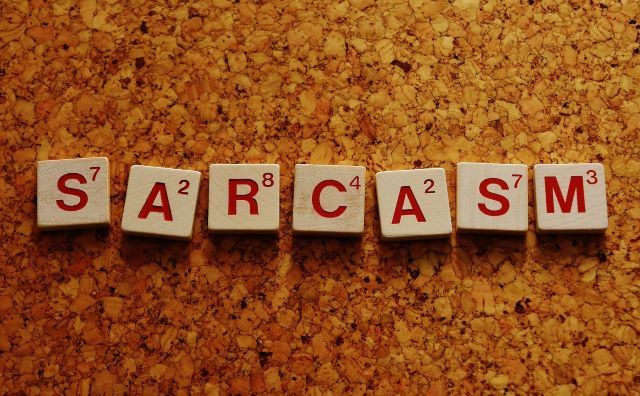
Physical humour is not so easy to show via the written word. You do, I think, need to set up early on that a character is capable of the kinds of things which could lead to physical comedy. Say if they’re on the clumsy side and later in the story they break something, that won’t come as a surprise but even then it may well be it will be sympathy rather than a smile which will be generated in the reader here. As you can’t know for sure how the reader will react, this is why physical comedy is hard to write.
Witty dialogue etc is easier, I feel, to get across. Certainly I find it a joy to write but it can only work when I believe my character would come up with the words I’ve given them if they could exist for real.
Conclusion
Comedy is a wonderful thing and I love humorous stories. Fiction generally can convey great truths so why shouldn’t funny fiction do so in an even more palatable way? I love the works of Wodehouse and Pratchett who, if you like, set out to be funny. The works of people like Austen have humour as part of their overall story. I want to see more humour rather than less in fiction. I feel the world could do with more of it, yes?
Over to you – what humorous books work for you and which do not? Is there a book you feel could have worked better with more humour in it?
Related Posts:-
Read interviews with Chandler’s Ford writer Allison Symes: Part 1 and Part 2.
Read blog posts by Allison Symes published on Chandler’s Ford Today.
Never miss out on another blog post. Subscribe here:


Leave a Reply