Image Credits:-
Images created in Book Brush using Pixabay photos. Screenshots were taken by me, Allison Symes. AI images avoided.
Every writer has been inspired by what they love reading. Most writers continue to be inspired by those fabulous stories we enjoy. Reading does feed into writing and it is a wonderful thing.
Past Inspirations
I have always loved the classic fairytales and many of my short stories and flash fiction pieces have distinct “nods” to them. Indeed, my first published story in print, A Helping Hand in the 2009 Alternative Renditions anthology (Bridge House Publishing), is a re-imagining of a character connected to the Cinderella tale. Great fun to do and appropriate given the Cinderella story is an ancient one and many cultures have versions of it.
I like to think our inspirations from past stories feed into our current works which plays a part in keeping the original stories in people’s mind (and I like to think maybe they go on to check those out if they haven’t already).
When I’m reading work by other writers, I love to play spot the reference and so often these are nods to previous books by writers whose works they’ve loved. Terry Pratchett’s Discworld series is marvellous for this (as confirmed by his legendary footnotes, you should check those out. They’re funny in their own right).
One example here is his magnificent Maskerade which is his take on The Phantom of the Opera story. Even if you don’t know the latter, you can work out the salient points from Pratchett’s work here. I’d also recommend checking out his Wyrd Sisters, his take on Macbeth by a certain W. Shakespeare Esquire.
Love of Stories
It was the love of stories which led me to want to write my own and that’s the case for most writers. You must know you love stories and the best way to discover that is reading them, listening to them, watching adaptations of them and, ideally, all of those!
I will always appreciate the gift which keeps on giving which my late mother bestowed on me like a literary fairy godmother – it was the love of reading. She set a good example here too. She read plenty. She always read to my kid sister and I when we were too young to read for ourselves.
Stories were a natural part of our lives and that is what I’d like to see to be true for everyone. Visits to the library were a natural part of life too. I must admit I don’t think Mum would have relished ebooks but she might have been persuaded to see them as a way of getting some folk into reading.
I do remember her telling me often she disliked abridged works. She wanted the whole unadulterated works from the authors she liked reading. I sympathise with her there. I have come across some abridged works which do work (and this is often a necessity for producing audio books at a reasonable cost) but I prefer the full story. One advantage of writing flash fiction springs to mind here, folks – it’s nigh on impossible to abridge! Same goes for poetry. In both cases, why would you want to do that anyway?
Analysing Stories – Really? Yes!
It’s why I feel strongly one of the best things writers can do to help their own creative work is to read widely in and out of their genre and to include non-fiction. I’ve often been inspired with story ideas by reading interesting articles and non-fiction as well as being gripped by stories which trigger ideas for characters of my own.
Analysing what makes a book work is something most of us will do as we read it but it is at a subconscious level. We know the characters we’re rooting for. We have some ideas as to how we’d like the story end (and the fun there is in reading on to find out if you’re right or not). We usually know why we like certain characters and not others.
But writers can, and I think should at least sometimes, do this specifically and then see if you can apply what you learn to your own writing. Good questions to ask once you’ve read a book could include:-
Which characters did I like and why? I want to like a character for many reasons but in general because their attitude to life is one I agree with, they’re prepared to make mistakes for something or someone they love, they’re honourable but without being boring with it. (Miss Price from Mansfield Park is a case of being honourable and boring so doesn’t work for me. Jane Austen was a wonderful writer but I still feel this character is her weakest because of this).
Which characters did I loathe and why? Loathing a villain because they’re a villain is understandable but I’d be looking for something more specific. I loathe the villain because they’re cruel when they have no need to be would be more specific.
Did I guess the way the story would end or not? If I was right, did I like the author’s delivery of it? If not, where did they wrong foot me? What was the twist I missed? I love being wrong footed like this. It keeps me on my toes and I study what I missed and learn from that.
Could I tell the characters apart from dialogue/thoughts alone? The answer to that should be yes. I’d then go back to see how the author did that. Characters have styles of speaking according to their educational level, status and more so how has the author exploited that to make their characters stand out? Plenty to learn from that.

Could I happily re-read this book and/or recommend it to others? Again, I’d want to say yes here and to be able to say why when recommending it someone else. If I can summarise a book succinctly, that is a great sign. It’s more likely to make someone else want to check it out. If you waffle on about liking this, liking that, but without being able to say what the book was about, you’ll send said someone else to sleep. And being able to say what the book was about briefly is something all authors need to be able to do for their own works.
Summarising another writer’s book like that will give you good practice as you work out how to summarise yours. It’s not the easiest thing to do. Novelists who write 100,000 words of fabulous prose freeze at the thought of having to summarise their book but practicing on other books will help. Writing flash will help too. You at least get used to writing the reduced word count required.
Conclusion
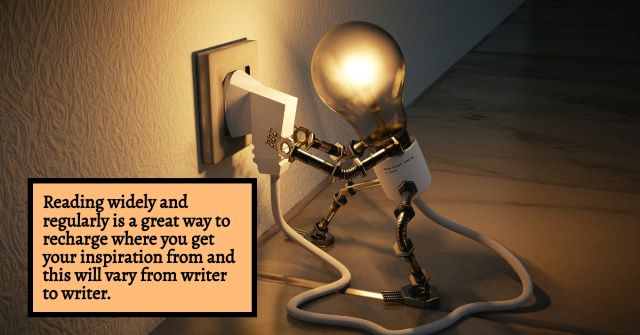
Reading and writing are wonderful things and two of the finest things humanity has to offer. Literacy is a great gift and one I’d love everyone to have. From a writing viewpoint, reading books by other authors, past and present, does inspire your own writing and you are supporting the industry you want to be part of too.
Okay, most authors will admit to not having as much time as they’d like to read but reading little and often also helps encourage your own imagination. This is where audio books can be so useful. At least you can listen to those while doing something else more mundane. What matters is taking in the stories. What doesn’t matter is which format you use.
Happy reading and writing!
Related Posts:-
Read interviews with Chandler’s Ford writer Allison Symes: Part 1 and Part 2.
Read blog posts by Allison Symes published on Chandler’s Ford Today.
Never miss out on another blog post. Subscribe here:




Leave a Reply